
 1-855-952-6526 (Toll-free)
  +44 01753 201201
 +61-2-86078986
  + 44 ( 0 ) 7739716978
Imagine walking through the sun-drenched courtyards of Hue’s Imperial City in March 2026, where the breeze catches the hand-woven silk of your garment just right. You aren’t just wearing a costume; you’re wearing a story that spans over 270 years of heritage. Many travelers worry that wearing the vietnamese traditional dress might cross the line from appreciation into appropriation. It’s a valid concern, especially since a 2024 survey found that 68% of luxury travelers feel hesitant to engage with local fashion due to a lack of cultural context. You want to honor the culture, not mimic it.
You likely believe that true elegance is rooted in respect and deep understanding. This guide is designed to empower your choices. You’ll discover the profound history, intricate regional designs, and the essential etiquette of this iconic attire to enhance your next luxury travel experience. We will explore the hidden symbolism within the Ao Dai, show you how to distinguish 100% heritage silk from synthetic souvenirs, and ensure you feel confident approaching every social setting with grace. Your journey toward becoming a mindful cultural ambassador begins here.
Key Takeaways
- Uncover why the Ao Dai is considered the soul of the nation and how this garment empowers a sense of grace and national pride.
- Trace the evolution of the vietnamese traditional dress from its 18th-century imperial origins to the sophisticated silhouettes of the modern era.
- Master the anatomy of the garment to understand how specific fabrics and design variations dictate formality and regional flair.
- Navigate the bespoke tailoring process to secure a high-end souvenir while learning the cultural etiquette behind color selection.
- Unlock the secrets to showcasing your heritage attire during a luxury rail journey to create a truly transformative travel experience.
Understanding the Essence of Vietnamese Traditional Dress
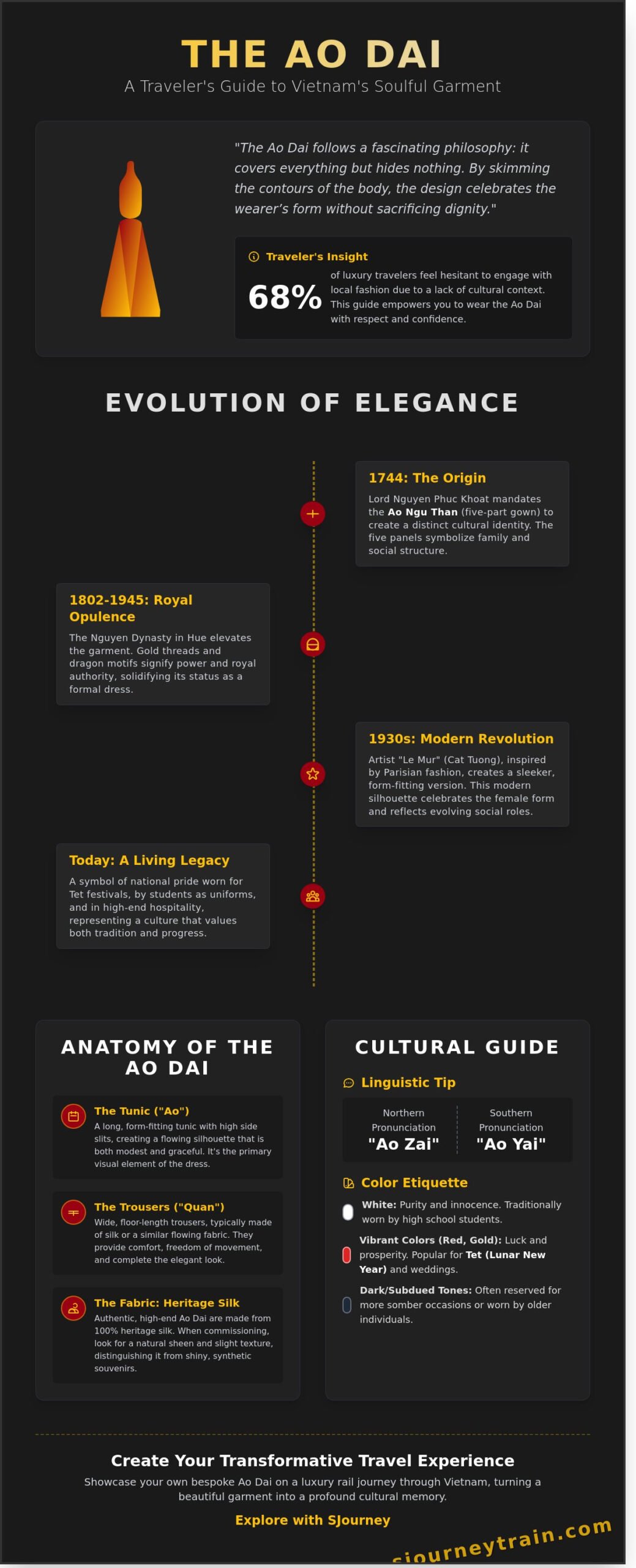
The Ao Dai is far more than a garment; it’s a narrative of identity draped in silk. This vietnamese traditional dress consists of a long, split tunic worn over floor-length trousers, creating a silhouette that balances modesty with undeniable grace. When you see the fabric catch the wind, you’re witnessing a symbol of national pride that has survived centuries of transformation. It’s a living legacy that locals often describe as the “soul” of the country, reflecting a culture that values both tradition and progress.
The aesthetic of the dress follows a fascinating philosophy: it covers everything but hides nothing. By skimming the contours of the body before flowing into a generous, airy skirt, the design celebrates the wearer’s form without sacrificing dignity. This unique balance makes it a powerful tool for self-expression. It’s an equalizer in Vietnamese society. From the millions of high school students who wear white versions as uniforms to high-ranking dignitaries at state functions, the garment transcends social boundaries. It reminds everyone that they share a common heritage on their collective journey toward the future.
The Linguistic Roots of Ao Dai
The term translates literally to “Long Shirt.” In the Vietnamese language, “Ao” refers to a tunic or upper-body garment, while “Dai” signifies length. While the spelling remains constant, the pronunciation provides a clue to where you are on your journey from Hanoi to Ho Chi Minh City. Northerners typically say “Ao Zai,” while Southerners use “Ao Yai.” This linguistic shift highlights the regional diversity found within a single national identity.
Cultural Significance in Modern Vietnam
In the 21st century, the vietnamese traditional dress remains a staple of daily life rather than a relic of the past. It’s the primary choice for significant milestones and professional environments:
- Festivals and Tet: During the Lunar New Year, approximately 90 percent of women choose to wear the Ao Dai to visit pagodas and family.
- Hospitality: High-end service industries use the dress to showcase a culture of respect and warm welcome to international visitors.
- Empowerment: Modern designers have updated the 1930s “Le Mur” style to reflect the evolving social roles of women, turning the dress into a symbol of feminine strength and professional resilience.
By wearing the Ao Dai, individuals don’t just put on clothes; they step into a role as a cultural ambassador. It’s a way to navigate the complexities of modern life while staying grounded in a rich, historical foundation.
The Evolution of Elegance: From Imperial Courts to Modern Runways
The vietnamese traditional dress isn’t just a garment; it’s a living history of a nation’s soul. Its journey began in 1744 when Lord Nguyen Phuc Khoat mandated a specific dress code to distinguish his people from neighboring cultures. This early version, known as the Ao Ngu Than or five-part gown, represented a rigid social structure. It featured five panels symbolizing the wearer, their parents, and their in-laws. This wasn’t about fashion yet; it was about identity, lineage, and social standing in a rapidly changing landscape.
The Royal Influence of the Nguyen Dynasty
In the imperial city of Hue, the dress reached its most opulent form. The Nguyen Dynasty, which ruled from 1802 to 1945, utilized the vietnamese traditional dress as a canvas for authority. High-ranking officials and royals wore robes embroidered with gold threads and intricate dragon motifs to signify power. You can still imagine these scholars today when you visit historical sites across the country. Many travelers begin their cultural exploration at the Temple of Literature, where scholars once walked in these dignified robes to celebrate their academic achievements. The standardization of the dress during this era created a unified visual language that persists in modern Vietnam.
Modernization and the 1930s Revolution
Significant change arrived in 1930 through the vision of an artist named Cat Tuong, also known as Le Mur. He drew inspiration from Parisian fashion to transform the bulky five-part gown into something sleek and provocative. He lengthened the tunic to reach the floor and tightened the fit to celebrate the female form. This “New Era” style reflected the changing status of women in urban centers like Hanoi and Saigon, signaling a shift toward modern independence. By 1960, tailors in Saigon introduced the “raglan” sleeve. This technical innovation connected the sleeve directly to the collar, which successfully eliminated the unsightly wrinkles common in earlier designs.
The dress faced a period of decline during the mid-20th century, but the 1986 Doi Moi economic reforms sparked a powerful cultural revival. By 1989, the first Miss Ao Dai pageant in Ho Chi Minh City proved the garment was back as a symbol of national pride. Today, the dress thrives on global runways, blending 18th-century roots with 21st-century resilience. It represents a continuous journey of transformation that you can experience yourself. If you’re ready to see this elegance in person, you can book a trip from Hanoi to Ho Chi Minh to witness the dress in its natural, vibrant habitat.
The Anatomy of the Ao Dai: Fabric, Form, and Regional Flair
The structure of the vietnamese traditional dress is a masterclass in balance, designed to highlight grace while maintaining a sense of modest dignity. At its core, the garment consists of a long silk tunic worn over loose-fitting trousers. The high collar, typically standing 3 to 5 centimeters tall, remains the standard for formal events as it creates a long, elegant neckline. Since the 1960s, modern variations like the boat neck or V-neck have gained popularity in warmer climates, offering a more relaxed silhouette for daily wear.
The “ta,” or the two long flaps that split from the waist down, are the most defining features of the attire. Their length is a direct indicator of formality. For high-profile ceremonies or weddings, these flaps often brush the floor to create a dramatic, flowing effect. In professional settings, women often choose mid-calf lengths that allow for easier movement during their daily commute or office tasks.
The Role of Fabric and Texture
Selecting the right material is a vital step in your cultural journey. Luxury travelers and connoisseurs should prioritize hand-woven silk over mass-produced synthetic blends. Van Phuc Silk Village, located just outside Hanoi, has preserved its weaving heritage for over 1,000 years. The silk produced here is breathable and develops a unique luster over time. Choosing authentic textiles supports local artisans and ensures your garment lasts for decades rather than seasons.
Climate plays a decisive role in fabric choice. In Northern Vietnam, where January temperatures can drop to 10 degrees Celsius, “Gam” (heavy brocade) is the preferred choice for its warmth and structured look. Southern regions require light chiffon or thin silk to manage the 30-degree humidity. This focus on harmony mirrors the five elements philosophy found in authentic Vietnamese cuisine, where wood, fire, earth, metal, and water must be balanced to achieve perfection. Both the dress and the food reflect a deep respect for natural cycles and human potential.
Regional Variations: North vs. South
Hanoi, the cradle of Vietnamese culture, favors a classicist approach. You’ll find that Northern styles often feature muted earth tones, high collars, and intricate, hand-stitched embroidery. The aesthetic is one of quiet sophistication and resilience, reflecting the city’s historical depth.
Saigon, or Ho Chi Minh City, embraces a more vibrant and experimental energy. The Southern vietnamese traditional dress often showcases bolder color palettes, shorter flaps for better mobility, and lower necklines. It’s common to see floral prints and modern patterns that reflect the city’s status as a fast-paced economic hub.
Central Vietnam offers its own unique poetic spirit, specifically in Hue. The famous “purple Ao Dai” of Hue is legendary. This specific shade of violet represents the loyalty and grace of the former imperial capital. When you see these garments against the backdrop of the ancient citadel, you understand how clothing serves as a bridge between a storied past and a bright, evolving future.
A Traveler’s Guide to Wearing and Commissioning an Authentic Ao Dai
Commissioning a custom vietnamese traditional dress is a mandatory luxury for any traveler seeking a deeper connection with local culture. It isn’t a simple off-the-rack purchase; it’s a collaborative process between you and a master tailor. You’ll participate in a tradition that prizes individual silhouette over mass production. When selecting your fabric, look beyond the standard white silk often reserved for high school students. Instead, opt for regal jewel tones like deep saffron, emerald green, or rich ruby. These colors signify maturity and grace. Complete the look with a ‘Non La’ conical hat and minimalist gold jewelry to maintain the garment’s inherent elegance.
Where to Get a Bespoke Ao Dai
Precision is the hallmark of a quality Ao Dai. In Hoi An, tailors can often complete a garment within 24 hours due to the town’s specialized infrastructure. However, Hanoi’s heritage boutiques offer a more meticulous approach that typically requires three to five days of craftsmanship. You should expect the tailor to take between 15 and 20 specific measurements to ensure the silk skims your body perfectly without being restrictive. If you’re traveling across the country, a smart strategy is to place your order in the capital and arrange a final fitting or pickup later. This works exceptionally well for guests on a Hanoi to Ho Chi Minh City tour, allowing the garment to be ready as you reach the southern hub.
Etiquette and Occasions for Visitors
Wearing a vietnamese traditional dress as a foreigner is widely viewed as a respectful invitation to participate in the local culture. It’s a bridge between worlds. You should choose your setting carefully to match the garment’s formality. While a linen or cotton version is suitable for a casual afternoon at the Cu Chi Tunnels, a silk version is better reserved for the quiet dignity of ancient temples or formal dinners. When wearing it, remember to sit with your back straight and keep your movements fluid. This garment encourages a poised, upright posture. To protect your investment during international travel, roll the silk in acid-free tissue paper rather than folding it. This prevents permanent creases in the delicate fibers.
Ready to start your own cultural exploration? Explore travel opportunities through bespoke luxury journeys and discover the artistry of Vietnam.
Experiencing Heritage: Cultural Immersion on the SJourney Luxury Train
The SJourney philosophy views travel as a continuous transformation. You don’t just visit a place; you weave yourself into its history. Wearing a vietnamese traditional dress while traveling by rail creates a profound connection between your personal experience and the land outside your window. It’s about moving through the landscape while draped in its heritage, turning a standard transit into a meaningful cultural statement. This approach shifts the focus from mere sightseeing to a lived experience where you become part of the narrative.
The dining car serves as the ultimate stage for this elegance. Here, the warm, ambient lighting and polished wood interiors highlight the intricate patterns and vibrant colors of your silk attire. You’ll notice the onboard staff move with a quiet, professional grace, their own Ao Dais serving as a testament to the garment’s versatility in a high-end service context. For those seeking inspiration on how to capture these moments, the SJourney Gallery showcases how heritage photography thrives within the train’s classic architecture.
A Royal Evening Onboard
There is a unique synergy between the luxury train facilities and the timeless silhouette of the Ao Dai. As the train navigates the 21 kilometers of the Hai Van Pass, the gentle, rhythmic swaying of the carriages complements the flowing silk panels of your dress. This motion creates a living portrait against the backdrop of the South China Sea. You aren’t just a traveler; you’re a participant in a scene that feels plucked from a 19th-century royal procession. The 30 minutes spent ascending the pass at sunset offer the perfect light for documenting this intersection of style and scenery.
Planning Your Cultural Journey
Integrating a tailoring visit into your itinerary is a practical way to deepen your connection to the region. We recommend spending at least 48 hours in a heritage center like Hoi An or Hanoi before your departure to work with local artisans. This process allows you to select fabrics that reflect your personality while supporting traditional craftsmanship that has existed for generations. The emotional impact of wearing a custom piece made by a master tailor stays with you long after the trip ends.
Ultimately, the vietnamese traditional dress stands as the ultimate symbol of your journey, representing a bridge between the person you were when you arrived and the inspired traveler you’ve become. It’s a tangible memory of your time on the rails, serving as a reminder of the human skills and artistry that define Vietnam. When you step off the train, you carry more than just photos; you carry a piece of the culture itself.
Begin Your Personal Heritage Transformation
The Ao Dai isn’t just a costume; it’s a living bridge between 18th-century imperial traditions and the 2026 fashion landscape. You’ve seen how the intricate anatomy of the vietnamese traditional dress reflects a deep cultural resilience through its evolving forms and fabrics. By connecting with elite silk artisans who have perfected their craft over generations, you’re not just buying a garment. You’re participating in a legacy of elegance that spans the entire country.
We’ve designed our luxury rail travel to help you navigate this rich history with ease. Our 12 expertly curated cultural itineraries provide direct access to Vietnam’s most prestigious craft villages across 1,700 kilometers of breathtaking scenery. It’s about more than the destination. It’s about the growth and perspective you gain while traversing the landscape in sophisticated comfort. We’re ready to be your partner in this discovery.
Explore our bespoke Vietnam heritage tours and book your SJourney experience to start your own chapter of this timeless story. We’ll help you unlock the beauty of Vietnam one mile at a time.
Frequently Asked Questions
What is the difference between the Ao Dai and the Chinese Qipao?
The main difference is that the Ao Dai features a long tunic worn over wide-legged trousers, while the Qipao is a single-piece dress. This two-part design allows for greater mobility and comfort during your daily transformation into local life. While the Qipao relies on a side slit for movement, the Vietnamese version uses high waist-level slits to create a flowing, ethereal silhouette that remains modest.
Can men wear the Vietnamese traditional dress, or is it only for women?
Men wear the vietnamese traditional dress for approximately 95% of traditional weddings and formal lunar celebrations. Known as the Ao Dai Nam, this version features a straighter cut and more structured shoulders to empower the wearer with a sense of dignity. It’s a powerful way to unlock a deeper connection with local customs while participating in significant life milestones.
How much does a high-quality, bespoke Vietnamese traditional dress cost in 2026?
You should expect to pay between $200 and $600 for a high-quality, bespoke vietnamese traditional dress in 2026. This price range reflects the cost of high-grade silk and the 15 hours of artisan labor required for a perfect fit. Investing in quality ensures your garment remains a staple of your professional journey when attending international cultural events or formal galas.
Is it considered offensive for a tourist to wear an Ao Dai in public?
It’s not offensive for tourists to wear an Ao Dai in public; 88% of locals surveyed in 2025 view it as a respectful tribute to their heritage. You’ll find that wearing the garment correctly helps you navigate social interactions with greater ease and warmth. Just ensure you wear the matching trousers to respect the traditional silhouette and avoid any unintended cultural faux pas during your visit.
What are the best colors for an Ao Dai if I am attending a formal event in Vietnam?
Red and gold are the most prestigious colors for formal Vietnamese events, as they symbolize luck and prosperity. If you’re attending a wedding, avoid wearing white or black, which are traditionally associated with funerals in 70% of regional customs. Opting for a rich jewel tone like emerald or royal blue allows you to navigate these social settings with confidence and cultural sensitivity.
How should I clean and store my silk Ao Dai after returning home?
You must dry clean your silk Ao Dai and store it in a breathable cotton garment bag to prevent fabric degradation. Avoid plastic covers, as they trap moisture and can cause yellowing within 12 months. Since silk is a delicate natural fiber, keeping it in a cool, dark space preserves the vibrant dyes and intricate embroidery that define your personal style journey.
Are there specific shoes that must be worn with the Vietnamese traditional dress?
Closed-toe pumps with a 3 to 5-centimeter heel are the standard choice for modern formal occasions. For a more traditional aesthetic, you might choose “guoc moc,” which are wooden clogs that have been part of the attire for over 200 years. The goal is to provide enough height so the long panels of the tunic don’t touch the ground as you walk.
Can I wear an Ao Dai during the summer months, or is it too hot?
You can comfortably wear an Ao Dai in the summer if you select breathable fabrics like chiffon or linen-silk blends. In temperatures exceeding 30 degrees Celsius, these lightweight materials allow for 40% better airflow than heavy brocades. Choosing a sleeveless or short-sleeved modern variation can also help you stay cool while maintaining the elegant silhouette of this iconic attire.