
 1-855-952-6526 (Toll-free)
  +44 01753 201201
 +61-2-86078986
  + 44 ( 0 ) 7739716978
What if the most significant historical site in Vietnam isn’t a museum or a monument, but a hidden world that 85% of visitors only experience through a crowded, surface-level lens? Visiting the chi tunnels saigon shouldn’t feel like a physical endurance test or a generic stop on a busy tour bus. You deserve a deeper connection to the strategic brilliance and human resilience found within this 250-kilometer network. We understand that for a luxury traveler, the fear of showmanship and claustrophobic crowds can be a deterrent to exploring such vital history.
This guide transforms that anxiety into a seamless, meaningful adventure. You’ll learn how to bypass the typical tourist traps through private, expert-led tours that prioritize historical integrity and physical comfort. We’ll show you how to integrate this profound experience into a 2026 itinerary that pairs perfectly with a luxury rail journey across the region. From avoiding the midday heat to securing the most insightful guides, we’ve mapped out a path that honors both the past and your personal standards of travel.
Key Takeaways
-
Uncover the strategic brilliance of the chi tunnels saigon, a 250km underground network that served as a resilient "city under the ground" during the Vietnam War.
-
Gain a deeper appreciation for human resilience by exploring the sophisticated three-level architecture and ingenious ventilation systems disguised within the natural landscape.
-
Navigate the choice between Ben Dinh and Ben Duoc to ensure your heritage experience remains authentic and aligned with a sophisticated travel perspective.
-
Elevate your logistics by arriving via private speedboat and unlocking the "Golden Hours" to experience the site’s history without the distraction of large crowds.
-
Discover how to weave this powerful historical chapter into a grander Vietnamese journey that balances raw history with the refined elegance of luxury rail travel.
Table of Contents
-
The Architecture of Resilience: How the Underground Network Functioned
-
Ben Dinh vs. Ben Duoc: Choosing the Right Heritage Experience
-
Beyond the Tunnels: Elevating Your Vietnamese Heritage Journey
What are the Cu Chi Tunnels of Saigon?
The chi tunnels saigon represent a profound testament to the power of human ingenuity and collective resilience. Spanning a massive 250-kilometer underground network, this site functioned as a literal "city under the ground" during the Indochina and Vietnam Wars. It wasn’t just a series of hiding spots; it was a sophisticated ecosystem featuring living quarters, kitchens, hospitals, and weapon factories. This labyrinthine structure allowed thousands of people to survive and operate beneath the feet of their opposition for years at a time.
Located in the Cu Chi district, the network formed the core of the "Iron Triangle," a 120-square-mile region that served as a vital stronghold for resistance forces. Its strategic importance to what is now Ho Chi Minh City cannot be overstated. For those seeking a deeper Cu Chi Tunnels historical overview, the site stands today as a powerful symbol of Vietnamese tenacity. It reflects a culture that refuses to be defined by its challenges, choosing instead to innovate through them.
-
Total length: Approximately 250 kilometers of interconnected tunnels.
-
Depth levels: Three distinct levels reaching up to 10 meters deep.
-
Purpose: A multi-functional military and civilian base.
The Origins of the Resistance
The story of the tunnels began in 1948 during the war against French colonial forces. Local residents used simple hand tools and wicker baskets to carve the initial passages out of the region’s dense, iron-rich clay. By the mid-1960s, the network expanded rapidly to accommodate entire villages. This transformation turned a simple defense system into a thriving underground society that could withstand heavy artillery and aerial bombardment, proving that human spirit is the ultimate tool for progress.
A Strategic Location Near Saigon
The chi tunnels saigon were positioned as the ultimate "gateway" to the southern capital, located only 60 kilometers from the city’s heart. This proximity allowed for rapid intelligence gathering and tactical strikes. The tunnels also sat near the Saigon River, providing essential transport and escape routes through the dense jungle. We believe that understanding these historical layers is essential for any modern explorer. You can experience this rich legacy as part of the broader Vietnam tours offered by SJourney, where we bridge the gap between historic resilience and luxury travel.
The Architecture of Resilience: How the Underground Network Functioned
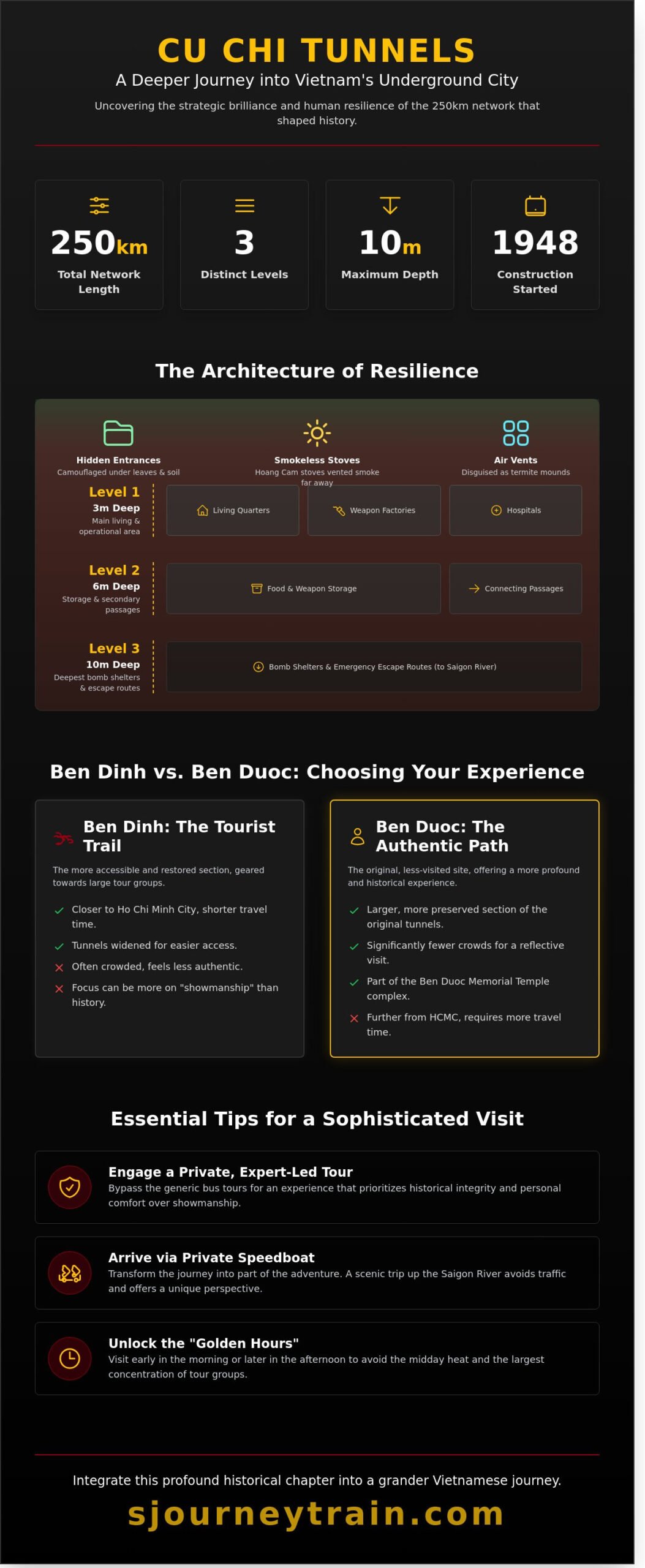
The chi tunnels saigon represent a masterclass in primitive yet sophisticated engineering. Spanning over 250 kilometres, this subterranean labyrinth operated on three distinct levels to protect inhabitants from high altitude carpet bombings. The first level sat three metres below the surface, while the deepest reached 10 metres, ensuring survival against the heaviest ordnance used in the 1960s. You’ll find that the network wasn’t just a series of holes; it was a fully functioning society. It contained hospitals for the wounded, weapon workshops for the resourceful, and meeting rooms where strategic decisions shaped the conflict’s path. Understanding the History of the Cu Chi Tunnels reveals how these spaces served as vital supply routes and living quarters during the height of the war. The Hoang Cam stove was a clever invention that used a series of underground flues to dissipate and cool smoke, releasing it far from the kitchen to prevent aerial detection.
Engineering for Survival
Stability was the primary concern for the builders. The region’s iron-rich clay soil, known as laterite, hardened like concrete once exposed to air, making the tunnels remarkably durable. Designers utilized narrow, zig-zagging passages to neutralize the physical advantages of larger soldiers and to contain the blast radius of grenades. Ventilation was equally ingenious. To keep oxygen flowing 10 metres underground, engineers created "breathing mounds" disguised as natural termite nests or hollow tree trunks, blending perfectly into the jungle floor.
Daily Life in the Darkness
Living underground required immense psychological strength. Families spent months in cramped, humid conditions, often emerging only at night to tend to crops. Women and children played pivotal roles, serving as lookouts and maintaining the intricate social fabric of this hidden world. Defense was also localized; booby traps were deployed as protective barriers to slow down intruders rather than purely offensive weapons. As you plan your luxury journey through Vietnam, these stories of human endurance provide a profound perspective on the sites you visit.
Ben Dinh vs. Ben Duoc: Choosing the Right Heritage Experience
Your visit to the chi tunnels saigon offers two distinct paths, and selecting the right one is essential for a meaningful journey. Most standard group tours gravitate toward Ben Dinh, while Ben Duoc remains the preferred destination for those seeking a quiet, reflective encounter with history. Understanding these differences allows you to tailor your itinerary to match your personal values and travel style, ensuring your time in Vietnam is spent with purpose.
Ben Duoc: The Authentic Alternative
Investing an extra 30 minutes in travel time brings you to Ben Duoc, located 75 kilometres from the city center. Exploring the chi tunnels saigon at Ben Duoc provides a more visceral sense of the past because the tunnels retain their original, narrow dimensions. The surrounding 100-hectare forest creates a serene backdrop that encourages deep reflection. You’ll benefit from more intimate interactions with guides who provide granular historical context without the distraction of large crowds. It’s a location designed for those who prioritize depth over convenience and want to witness history in its most raw form.
A highlight of this site is the Ben Duoc Memorial Temple. This structure honors 44,527 fallen soldiers and remains a profound site of cultural significance. Walking through the temple grounds allows you to appreciate the scale of sacrifice in a way that commercialized sites often overlook. If you’re planning a broader exploration of the region, consider how this experience fits into your journey from Ho Chi Minh City to Hanoi, ensuring your transition through Vietnam is as insightful as it is luxurious. This site isn’t just a tourist stop; it’s a classroom for resilience and human potential.
Essential Travel Tips for a Sophisticated Visit to Cu Chi
To truly appreciate the chi tunnels saigon, you need to escape the typical tourist rhythm and embrace a more refined pace. Start your day on the water. A private speedboat transfer from the Bach Dang Pier reduces a tedious two-hour road commute to a 75-minute breeze up the Saigon River. It’s the most sophisticated way to arrive, offering a unique perspective of the city’s evolving skyline before you reach the rural outskirts. You’ll beat the 10:00 AM rush when the 45-passenger tour buses typically descend on the site. Arrive by 8:00 AM to enjoy the cool morning air and the stillness of the forest.
Dress for the tropical environment without sacrificing style. Choose high-performance, breathable fabrics like linen or moisture-wicking technical blends that handle the humidity with ease. Closed-toe walking shoes are essential for navigating the jungle floor safely and comfortably. Don’t settle for a generic, scripted tour. Hire a private historian-guide who can offer a nuanced narrative. Their expertise transforms a simple site visit into a deep human connection with history, allowing you to ask complex questions and explore the 250-kilometer network at your own speed.
Navigating the Logistics
You can choose between a focused five-hour half-day trip or an eight-hour full-day immersion that includes a riverside lunch. Your operator should provide chilled, premium bottled water throughout the morning to ensure you stay hydrated and energized. The experience concludes with a traditional serving of steamed tapioca and fragrant pandan tea. This simple, authentic meal offers a quiet moment to reflect on the resilience and transformation you’ve just witnessed during your journey.
Accessibility and Comfort
You don’t have to go underground to appreciate the scale of this historical feat. While the chi tunnels saigon are famous for their narrow passages, crawling is entirely optional. Well-maintained walking paths allow you to explore the bunkers and outdoor displays from above ground without any physical strain. This excursion serves as a perfect cultural prelude before you transition to the next stage of your Vietnamese adventure. It fits seamlessly into your schedule before boarding a luxury train for a deeper exploration of the country’s diverse landscapes.
Ready to continue your journey through Vietnam in unparalleled comfort? Explore our curated luxury rail itineraries and start planning your next chapter today.
Beyond the Tunnels: Elevating Your Vietnamese Heritage Journey
Your visit to the chi tunnels saigon marks a powerful introduction to the resilience of the Vietnamese spirit. It’s a visceral, grounding experience that stays with you long after you emerge from the earth. However, a truly comprehensive exploration of this nation requires a balance of perspectives. Moving from the narrow, humid passageways of history into the expansive, refined world of luxury rail travel allows you to process these historical insights in total comfort.
SJourney serves as your bridge between these two worlds. We believe that heritage travel should be as restorative as it is educational. By choosing the rails for your next chapter, you transform a standard holiday into a sophisticated narrative of discovery. You can witness the visual evolution of the landscape from your window, shifting from the bustling energy of the south to the serene beauty of the central coast. As you journey through Vietnam’s diverse regions, you’ll encounter the rich cultural tapestry that includes everything from ancient temples to the elegant Vietnamese traditional dress worn during special occasions. Understanding the cultural depth of Vietnamese people and their diverse ethnic heritage enriches your appreciation of the resilience and ingenuity you’ve witnessed in the tunnels. For those seeking to explore travel opportunities that prioritize authenticity and personalized experiences, this combination of historical immersion and luxury rail transport represents the pinnacle of sophisticated Vietnamese exploration. Explore our Gallery to see the visual story of the experiences that await you.
For some travelers, these deep cultural dives spark an interest in longer-term stays or even retirement in the region. If you’re exploring that possibility, the Expat Retirement Chronicles provides valuable insights and planning support for making Southeast Asia your home.
The SJourney Luxury Train Experience
The transition from the grit of the chi tunnels saigon to the sanctuary of the train is designed to be seamless. After a day of physical exploration, you can retreat into the quiet elegance of our private cabins. These spaces are crafted to five-star standards, offering a peaceful environment to reflect on your day. Our commitment to your well-being extends to every detail, ensuring you wake up refreshed for the next destination.
-
Indulge in fine dining and beverage options that celebrate the diverse culinary map of Vietnam, using fresh, seasonal ingredients sourced from local regions.
-
Enjoy curated off-train excursions in Hue and Hanoi that continue the heritage narrative through imperial architecture and ancient traditions.
-
Relax in a climate-controlled environment that provides a sharp, welcome contrast to the tropical heat of the jungle sites.
Tailormade Itineraries for the Discerning Traveller
Creating a meaningful journey requires more than just a ticket; it requires a vision. For the 2026 travel season, we’ve refined our bespoke tours to merge military history with deep cultural immersion. We recommend the Hanoi to Ho Chi Minh City route for those who want a complete overview of the country’s transformation. This 1,700-kilometer path connects the political heart of the north with the economic engine of the south.
This isn’t just a transit; it’s a partnership in exploration. Our travel specialists work with you to ensure every stop aligns with your personal interests, whether you’re focused on architecture, gastronomy, or history. We invite you to speak with us today to design a unique itinerary that honors the past while embracing the luxury of the present.
Embrace the Spirit of Resilience and Refinement
Exploring the chi tunnels saigon isn’t just about walking through history; it’s about connecting with the profound human spirit that shaped the 121-mile underground network. You’ve discovered why the Ben Duoc site remains the premier choice for authenticity, offering a deeper connection to the 1960s architecture of resilience. By prioritizing private access and expert insights, you transform a standard excursion into a sophisticated exploration of Vietnamese identity.
Our team at SJourney believes your travel should be as seamless as it is transformative. We specialize in expertly curated private tours to Ben Duoc, ensuring every detail reflects your high standards. We provide seamless transfers from these significant historical sites directly to our luxury train cabins, allowing your reflection to continue in total comfort. We’re redefining Vietnamese travel through visionary mentorship and heritage, focusing on the human stories that make every mile meaningful.
Begin your bespoke Vietnamese heritage journey with SJourney
Your journey through Vietnam is an evolving story of growth and discovery. We’re here to guide you every step of the way.
Frequently Asked Questions
Is it safe to go inside the Cu Chi Tunnels?
Yes, entering the chi tunnels saigon is safe because the sections open to the public have been widened by 20 percent and reinforced with concrete. You’ll find emergency exits every 20 meters, and staff monitor the airflow constantly. If you feel any discomfort, you can exit the system within 30 seconds from almost any point.
How far are the Cu Chi Tunnels from Ho Chi Minh City?
The Ben Dinh site is 45 kilometers from District 1, while the more authentic Ben Duoc site is 70 kilometers away. Expect a 90 minute drive in a private SUV or a 75 minute journey by luxury speedboat via the Saigon River. Choosing the river route saves you from the two hour traffic delays common on the main highways.
Can people with claustrophobia visit the tunnels?
You can fully enjoy the historical experience without ever stepping underground, as 85 percent of the exhibits are located on the surface. The tunnels are narrow, even after being enlarged for Western frames. If tight spaces trigger anxiety, focus on the outdoor traps, tank relics, and the 15 minute documentary film instead.
What is the best time of year to visit the tunnels?
The optimal window for your visit is the dry season, which runs from December to April. During these months, humidity remains manageable and the forest floor stays firm for walking. Temperatures typically range between 28 and 34 degrees Celsius, providing the best conditions for exploring the outdoor grounds of the chi tunnels saigon.
Are the Cu Chi Tunnels suitable for senior travellers?
The sites are suitable for senior travellers who can manage 1.5 kilometers of walking on shaded, flat forest paths. We recommend the Ben Duoc site specifically, as it features 50 percent fewer crowds and a more relaxed pace. Electric carts are available at the entrance to assist those who prefer not to walk the entire perimeter.
What should I bring for a day trip to the tunnels?
Pack a high quality insect repellent with at least 30 percent DEET to protect against mosquitoes in the jungle environment. Wear breathable linen or cotton clothing and sturdy walking shoes with good grip. A hat and a personal refillable water bottle are essential for staying hydrated during the two hour walking tour.
Do I need to book a private tour for the Cu Chi Tunnels?
Booking a private tour is the most effective way to unlock a personalized and seamless experience. About 95 percent of luxury travellers choose private guides to bypass the rigid schedules of large groups. You can tailor your itinerary on our travel planning page to include a sunrise departure, ensuring you arrive before the 10:00 AM rush.
Is there a dress code for the Ben Duoc Memorial Temple?
You must cover your shoulders and knees when entering the Ben Duoc Memorial Temple to show respect for the local culture. This rule is strictly enforced for 100 percent of visitors at this sacred site. If you’re wearing shorts or a tank top, carry a light sarong or scarf in your bag to wrap around yourself before entering the temple gates. Understanding proper attire for cultural sites is part of appreciating the broader context of Vietnamese traditional dress and its significance in formal and sacred settings.