
 1-855-952-6526 (Toll-free)
  +44 01753 201201
 +61-2-86078986
  + 44 ( 0 ) 7739716978
What if the true measure of a culture’s resilience wasn’t found in its architecture, but in the delicate balance of five elemental flavours harmonized in a single bowl? You’ve likely felt the frustration of scanning generic top-ten lists that fail to capture the sophistication of authentic Vietnamese cuisine. You understand that a truly memorable meal requires more than just high-quality ingredients; it demands a connection to the heritage and intent behind every bite. It’s about the soul of the dish.
This guide empowers you to discover the philosophical depth and regional diversity of these flavours, curated specifically for the traveler who values excellence over trends. You’ll learn how to identify the refined techniques used across Vietnam’s 58 provinces to transform simple ingredients into culinary art. We’ll explore the distinct culinary identities of the North, Central, and South regions to help you align your travel itinerary with the most significant heritage flavours of Southeast Asia. By understanding the "why" behind the bowl, you can transform a simple dinner into a profound moment of cultural connection.
Key Takeaways
-
Master the philosophy of balance by understanding how the five fundamental elements of taste harmonize to create a truly restorative dining experience.
-
Navigate the diverse regional landscapes from Hanoi to Saigon to appreciate how geography and history shape every local specialty.
-
Elevate your appreciation for vietnamese cuisine by looking beyond the street stall toward the refined revival of forgotten royal and heritage recipes.
-
Curate your own essential tasting list of complex, time-intensive dishes that represent the pinnacle of Southeast Asian gastronomic art.
-
Learn how to transform your travel into a continuous sensory journey where the menu evolves as you cross regional borders in luxury.
Table of Contents
-
The Philosophy of Balance: Understanding the Five Elements of Vietnamese Cooking
-
Beyond the Street Stall: The Rise of Vietnamese Heritage Dining
The Philosophy of Balance: Understanding the Five Elements of Vietnamese Cooking
Vietnamese cooking isn’t just about feeding the body; it’s a deliberate journey toward harmony. When you explore a comprehensive overview of Vietnamese cuisine, you’ll see that every bowl of pho or plate of bun cha follows a strict internal logic. This logic ensures that 100% of the ingredients work together to support your physical and emotional well-being. It’s a culinary philosophy that transforms a simple meal into a restorative experience, mirroring the way we navigate growth in our professional lives.
Freshness in this context is a non-negotiable requirement. Most traditional kitchens source herbs and produce twice daily to ensure 100% vitality in every leaf of mint or stalk of lemongrass. This commitment to "living" food means that the nutrients remain intact, providing the energy needed to thrive. In vietnamese cuisine, the kitchen functions as a space for both nourishment and preventative medicine.
The Five Elements (Ngu Vi) in Every Bite
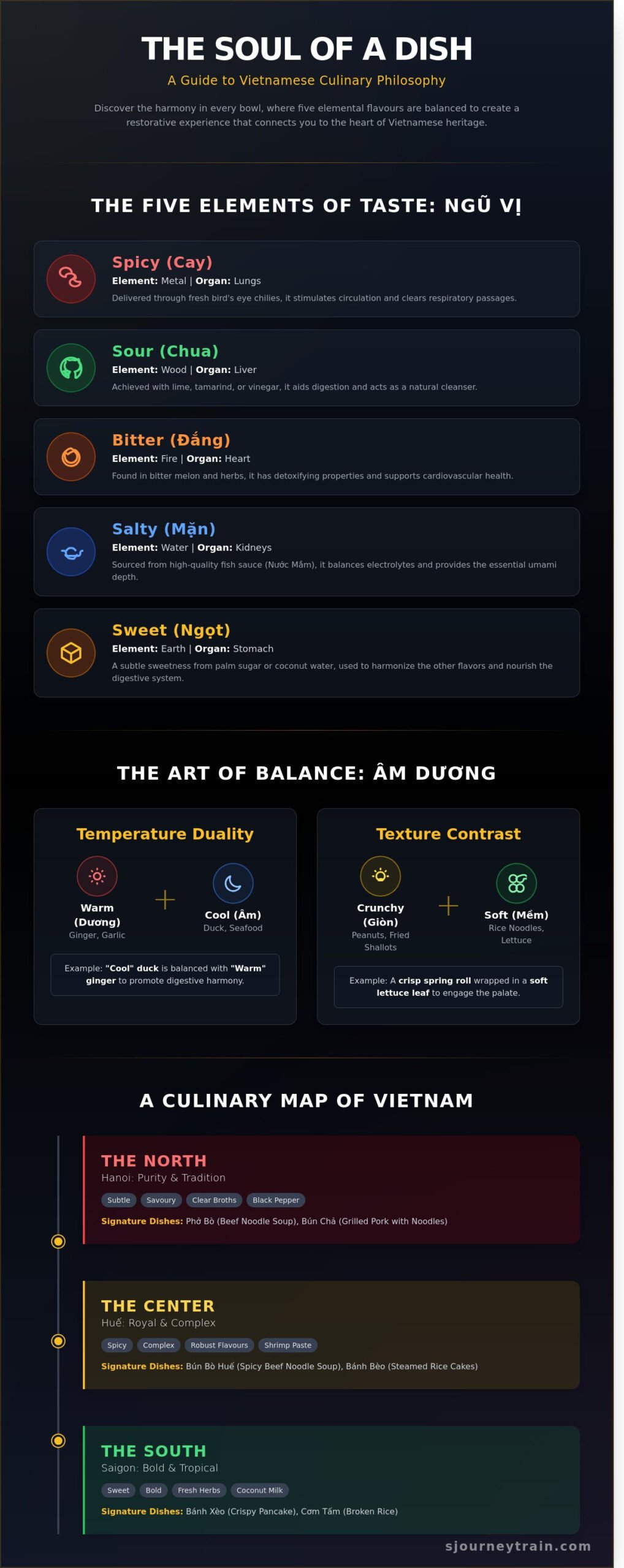
The foundation of every dish rests on the Ngu Vi, or the five fundamental tastes. These tastes correspond to the five elements of the universe and specific organs in the body, creating a holistic approach to eating. This system isn’t random; it’s a precise map for health.
-
Spicy (Metal): Targeted at the lungs, often delivered through fresh bird’s eye chilies.
-
Sour (Wood): Aimed at the liver, achieved through lime juice or fermented vinegar.
-
Bitter (Fire): Connected to the heart, found in bitter melon or specific leafy greens.
-
Salty (Water): Linked to the kidneys, primarily sourced from high-quality fish sauce.
-
Sweet (Earth): Associated with the stomach and spleen, balanced with coconut water or cane sugar.
Fish sauce, or Nuoc Mam, acts as the unifying umami element that bridges these distinct profiles. The Ngu Vi serves as the structural DNA of every authentic recipe, ensuring that no single flavor overpowers the collective experience.
Yin-Yang: The Art of Temperature and Texture
Beyond taste, the principle of Am Duong, or Yin and Yang, dictates how ingredients are paired. This balance focuses on the "heating" or "cooling" properties of food rather than physical temperature. For instance, duck is considered a "cool" meat, so it’s almost always served with ginger, a "warm" spice, to prevent digestive upset. This thoughtful pairing promotes internal equilibrium and long-term resilience.
Texture plays an equally vital role in this sensory journey. A single bite often features a contrast between "Gion" (crunchy) and "Mem" (soft). Think of a crisp spring roll wrapped in a soft lettuce leaf or crunchy peanuts sprinkled over silky rice noodles. This intentional contrast keeps the palate engaged and reflects the complex, multi-layered nature of vietnamese cuisine. By mastering these balances, you don’t just eat; you participate in a centuries-old tradition of harmony and health.
A Culinary Map: Regional Flavours from Hanoi to Saigon
Understanding vietnamese cuisine requires looking at the country’s unique geography. The 3,260-kilometer coastline acts as a bridge between distinct climates, creating a pantry that evolves as you move from the chilly mountains to the tropical delta. While the north experiences four distinct seasons, the south enjoys a humid environment that supports year-round harvests. This shift isn’t just about ingredients; it’s a reflection of history and human resilience. Travellers on the SJourney rail route witness this transition through their windows and on their plates, experiencing a literal movement from subtle purity to bold, tropical heat.
This culinary progression is documented well by researchers who study the regional cuisines of Vietnam, noting how the environment dictates every seasoning choice. As you navigate these flavours, you’re essentially tracing the path of the nation’s growth and cultural exchange.
The North: Purity and Tradition in Hanoi
Hanoi is the birthplace of Pho, where the focus remains on clear, savoury broths that highlight the quality of the beef or chicken. Northern flavours are often subtle, reflecting over 1,000 years of Chinese influence and a preference for black pepper over chilli. You’ll find legendary dishes like Bun Cha (grilled pork) or the 130-year-old Cha Ca La Vong, which uses turmeric and dill to create balance. It’s a style that prizes technique and restraint over heavy spice.
The Central Highlands: The Royal Legacy of Hue
Hue serves as the culinary soul of the nation. It was the seat of the Nguyen Dynasty until 1945, and the legacy of imperial chefs remains today. Meals here often consist of many small, intricate portions designed to please an emperor. Locals use intense spices and pungent Mam Ruoc (shrimp paste) to create depth. With over 1,700 distinct dishes originating in this region, it’s a place where food is treated as a sophisticated art form. The imperial heritage of Hue extends beyond cuisine to encompass the elegant Vietnamese traditional dress worn by royal court members, reflecting the same attention to detail and cultural refinement found in the region’s culinary traditions.
The South: Tropical Abundance in Ho Chi Minh City
The South is vibrant, sweet, and herb-heavy. Influenced by the fertile Mekong Delta, dishes here use palm sugar and coconut milk. You’ll see the impact of French colonialism through the iconic Banh Mi and a thriving coffee culture that dates back to the mid-19th century. Canh Chua, a sour soup featuring pineapple, tamarind, and bean sprouts, perfectly expresses the region’s biodiversity. It’s an invitation to unlock your own potential for discovery by embracing these diverse regional perspectives.
Beyond the Street Stall: The Rise of Vietnamese Heritage Dining
Many travelers believe authenticity only exists on a low plastic stool at a busy intersection. While street food is a vital pulse, a sophisticated movement is reclaiming the depth of vietnamese cuisine within more refined settings. This "Heritage Dining" shift isn’t about changing the soul of the food. It’s about restoring forgotten royal recipes from Hue and regional gems that require hours of meticulous preparation; time that a street vendor simply doesn’t have. Chefs are now moving into restored 19th-century colonial villas and ancestral heritage homes to create a sensory bridge between the past and the present.
The Fine Dining Evolution
The culinary landscape shifted permanently in June 2023 when the Michelin Guide awarded its first four stars to restaurants in Hanoi and Ho Chi Minh City. This recognition validated a new generation of chefs who apply 5-star techniques to age-old Vietnamese culinary traditions. They’ve embraced "slow food" principles, where a single broth might simmer for 48 hours to achieve perfect clarity. Every degustation menu tells a story. It turns a meal into a narrative journey that celebrates cultural resilience and culinary craft.
Authenticity in a Luxury Context
Refined authenticity means honoring the specific provenance of every ingredient. It’s about the sharp bite of peppercorns from Phu Quoc or the delicate, small-clove garlic from Ly Son island. These details matter because they define the plate’s character. You can experience this elevated approach to flavor while moving through the country’s heart on the SJourney Luxury Train. It serves as a mobile venue where heritage flavors meet world-class service. This evolution proves that luxury doesn’t dilute vietnamese cuisine; it protects and elevates it for the modern explorer. By focusing on ingredient integrity, these venues ensure that the spirit of the dish remains intact even in the most opulent surroundings.
The Luxury Traveller’s Essential Tasting List
Your exploration of vietnamese cuisine is a journey of transformation. It’s a chance to connect with a culture that values the meticulous over the hurried. While street food has its charm, the true soul of the country lives in its heritage masterpieces. These dishes represent a standard of excellence that mirrors the dedication required for any professional growth or personal evolution. They are time-intensive, technically demanding, and deeply rooted in the history of the regions they represent.
Must-Try Heritage Masterpieces
The following dishes represent the pinnacle of culinary dedication. They require hours of preparation before they ever reach your table. These are not fast foods; they are edible legacies.
-
Cha Ca La Vong: Since 1871, the Doan family has perfected this turmeric-marinated fish in Hanoi. It’s a 150-year-old ritual where the fish is seared with fresh dill and spring onions at your table.
-
Bun Bo Hue: This imperial noodle soup from Central Vietnam uses a 24-hour simmering process. The broth balances lemongrass and fermented shrimp paste to create a complex, royal profile that dates back to the Nguyen Dynasty.
-
Banh Xeo: This Southern "sizzling pancake" has evolved since the early 1800s. Its signature crunch comes from stone-ground rice flour and coconut milk, creating a texture that shatters upon the first bite.
Refined Beverages and Desserts
Vietnamese sweets and drinks are often as intricate as the main courses. They offer a moment of reflection and calm in a fast-paced world.
-
Egg Coffee (Ca Phe Trung): Created in 1946 at Cafe Giang, this drink uses whisked egg yolks to create a rich, meringue-like texture. It remains a resilient symbol of Northern innovation.
-
Lotus Tea: This is the "King of Teas." Artisans use 1,000 fresh lotus blossoms to scent just one kilogram of green tea over five consecutive nights to ensure a deep fragrance.
-
Che: High-end heritage restaurants often serve the 36 varieties of royal sweet soups. These range from roasted pork wrapped in cassava flour to delicate lotus seed broths.
When you navigate menus at heritage landmarks like the 1901-founded Metropole Hanoi, look for the phrase "Gia Truyen." This signals a family recipe with documented history. High-end dining in Vietnam is about the human element. Ask your server about the herb origins; many restaurants partner with Tra Que, a village that has practiced organic farming for over 300 years. This transparency ensures you aren’t just eating; you’re participating in a legacy of excellence. Every meal is an opportunity to unlock your potential for cultural discovery and professional inspiration.
Navigating the Gastronomic Wonders of Vietnam with SJourney
You don’t just observe Vietnam through a window; you taste its history through every mile traveled. SJourney transforms the luxury rail experience into a moving banquet where the landscape and the plate are in perfect harmony. Our onboard dining features a rotating menu that shifts as the train crosses regional borders. This ensures your meal reflects the specific geography outside your cabin, from the refined imperial flavors of Central Vietnam to the bold, herb-forward profiles of the South.
True hospitality is a human skill that goes beyond simple service. Our team acts as your culinary guides, sharing the stories and traditions that define vietnamese cuisine. We believe that understanding the "why" behind a dish is what creates a lasting impact on your travel experience. You’ll find that our staff’s expertise is as essential to your journey as the destinations themselves. We offer several ways to deepen this connection:
-
Private market tours led by master chefs with over 15 years of local experience.
-
Hands-on cooking classes that reveal the secrets of traditional fermentation and spice balancing.
-
Bespoke tasting menus that highlight rare regional ingredients found only in remote provinces.
A Taste of the Journey
We’re committed to sourcing 85% of our ingredients from local farmers and artisans located within 40 miles of our station stops. This dedication to seasonal freshness allows you to thrive on a diet that’s both vibrant and authentic. As the train moves, your palate undergoes a transformation, mirroring the evolution of the country’s heritage. It’s a sensory bridge between the golden age of rail travel and the timeless flavors of the land.
Your Custom Culinary Itinerary
You can plan your bespoke heritage tour with a specific focus on the culinary arts. Whether you want to hunt for the perfect bowl of Pho at a 50-year-old street stall or dine in a restored colonial villa, we empower you to design your own path. To eat vietnamese cuisine is to participate in a thousand-year-old conversation about culture, resilience, and community. Contact our travel specialists to unlock your Vietnamese culinary journey and begin your transformation today.
Begin Your Personal Culinary Transformation
Authentic vietnamese cuisine is more than just a meal; it’s a profound exploration of balance and heritage. You’ve discovered how the 5 fundamental elements of taste create harmony in every dish, from the delicate broths of the north to the bold spices of the south. Navigating this 1,700-kilometer culinary landscape requires a guide who understands that true transformation happens when you connect deeply with local culture and history.
SJourney empowers you to unlock these hidden stories through curated heritage tours led by our team of 12 local experts. You’ll gain exclusive access to 3 distinct colonial-era dining venues, each maintaining a 5-star rating for historical preservation and culinary excellence. Whether you’re savoring regional specialties prepared by our master chefs during your journey or exploring the Cu Chi tunnels in Saigon to understand the resilience that shaped the nation’s culinary identity, your path to discovery is paved with authenticity. When you’re ready to explore travel opportunities that prioritize your peace of mind, our heritage-focused rail journeys offer the perfect blend of culinary excellence and cultural immersion. It’s time to elevate your travel experience and embrace the rich potential of every destination you visit.
Explore Vietnam’s Heritage with SJourney and start your next great chapter today. We’re ready to help you thrive on this remarkable path.
Frequently Asked Questions
Is Vietnamese cuisine spicy compared to Thai or Indian food?
Vietnamese cuisine is generally less spicy than Thai or Indian dishes because it prioritizes a balance of five fundamental taste elements. While a Thai green curry might reach 10,000 Scoville Heat Units, a typical Vietnamese bowl focuses on fresh herbs like mint and cilantro to provide brightness rather than intense heat. You’ll find chilies served on the side in 90% of local eateries, which allows you to control your own journey through the flavors.
What is the most famous dish in Vietnamese cuisine besides Pho?
Banh Mi is the most iconic dish in vietnamese cuisine after Pho, gaining international recognition when the term was added to the Oxford English Dictionary in 2011. This baguette sandwich represents a perfect fusion of cultures, typically featuring pate, pickled carrots, and fresh cilantro. In cities like Hoi An, you can find vendors who’ve been perfecting this single recipe for over 30 years, proving that simple ingredients create a world-class culinary experience.
How did French colonialism influence modern Vietnamese food?
French colonialism between 1887 and 1954 introduced ingredients like baguettes, coffee, and butter that are now central to the local diet. The popular soup Pho actually evolved from "pot-au-feu," a French beef stew, adapted by local cooks using rice noodles and ginger. Today, Vietnam is the world’s second-largest coffee producer, a legacy that started with French plantations in the central highlands during the 19th century.
Can I find vegetarian or vegan options in authentic Vietnamese heritage dining?
You can easily find vegan options because approximately 10% of the population practices Mahayana Buddhism, which encourages meat-free "Chay" meals. On the 1st and 15th day of every lunar month, thousands of restaurants switch to entirely plant-based menus to honor these spiritual traditions. This cultural practice ensures that even high-end heritage restaurants offer sophisticated dishes made from tofu, mushrooms, and local greens like morning glory.
What is the significance of fish sauce (Nuoc Mam) in Vietnamese cooking?
Fish sauce, or Nuoc Mam, acts as the essential seasoning that provides the savory "umami" base for almost every meal. High-quality sauces from Phu Quoc island are graded by their nitrogen content, with a 40N rating representing the premium standard for dipping sauces. It’s more than an ingredient; it’s a cultural staple that 95% of households use daily to enhance the natural flavors of their fresh ingredients.
What should I expect from a luxury dining experience in Vietnam?
Luxury dining in Vietnam offers a sophisticated blend of historical charm and modern innovation, often set within restored 19th-century colonial villas. In 2023, the Michelin Guide officially launched in the country, awarding stars to 4 exceptional restaurants in Hanoi and Ho Chi Minh City. You’ll navigate menus that pair traditional fermentation techniques with premium imports like Wagyu beef, creating a bridge between heritage and global excellence. For a complete cultural immersion, many luxury travelers combine their culinary journey with visits to the Cu Chi tunnels in Saigon to understand how historical resilience shaped the nation’s food culture. Understanding the cultural context behind these culinary traditions becomes even more meaningful when you learn about Vietnamese people and their rich cultural heritage, which deeply influences every aspect of the dining experience.
Is it safe for luxury travellers to eat street food in Vietnam?
Street food is safe and essential for understanding vietnamese cuisine, provided you follow the lead of the 80% of locals who dine curbside daily. Choose stalls with high turnover where food is cooked at temperatures above 75 degrees Celsius right in front of you. This transparency allows you to witness the freshness of the ingredients firsthand, making it a reliable way to explore authentic flavors while maintaining your well-being.
How does the regional climate affect the taste of Vietnamese food?
The 1,600-kilometer stretch of coastline creates distinct microclimates that dictate regional flavor profiles. Northern dishes are often more subtle and peppery to combat cooler winters, while Southern recipes use more coconut milk and sugar due to the tropical heat. Central Vietnam, particularly around Hue, is known for its spicy and complex dishes, reflecting its history as the royal capital until 1945. These regional differences reflect the diverse cultural identities of Vietnamese people across the country’s 54 ethnic groups, each contributing unique flavors and cooking techniques to the national cuisine.